Two-Wheeler ABS in India: Technology, Regulations and OEM Supplier Guide
Introduction
Anti-lock Braking Systems (ABS) are an important active safety technology for motorcycles, scooters and electric two-wheelers. For vehicle manufacturers, selecting the right ABS technology involves more than choosing a component. It requires careful consideration of braking architecture, vehicle integration, calibration, validation and applicable regulations.
For OEMs searching for a two-wheeler ABS supplier in India, understanding these factors can help simplify technology selection and product development. Ettiksoft Technologies develops indigenous single-channel and dual-channel ABS solutions for two-wheeler applications, with engineering support for vehicle integration and validation.
What is ABS?
An Anti-lock Braking System (ABS) is an electronic safety system that helps prevent a wheel from locking during braking. It monitors wheel speed and automatically adjusts brake pressure when it detects conditions indicating an impending wheel lock.

By helping maintain wheel rotation during hard braking, ABS can support steering control and vehicle stability. Its effectiveness depends on factors such as tyre grip, road conditions, braking hardware and vehicle-specific calibration. ABS cannot eliminate every accident or guarantee a shorter stopping distance in every situation.
How Does Two-Wheeler ABS Work?
A typical motorcycle or scooter ABS operates through the following process:
The rider applies the brake lever or pedal.
Wheel-speed sensors measure the rotation of the monitored wheels.
The ABS Electronic Control Unit (ECU) processes the sensor signals.
The control system detects excessive wheel deceleration or an impending lock.
The hydraulic control unit adjusts brake pressure by holding, releasing or reapplying it.
This process repeats as necessary to help limit wheel slip.
The main components include wheel-speed sensors, tone rings, an ABS ECU, a hydraulic modulator, valves, a return pump and associated wiring and connectors. Their design and calibration must suit the vehicle's braking system and operating conditions.
Single-Channel vs Dual-Channel ABS
The choice between single-channel and dual-channel ABS depends on the vehicle platform, safety requirements, packaging and cost considerations.
Single-channel ABS controls braking pressure at one wheel, commonly the front wheel. It offers a simpler architecture, but the wheel without ABS control can still lock.
Dual-channel ABS independently controls the front and rear brake circuits. It requires additional hydraulic components, integration work and vehicle-specific calibration.
OEMs should evaluate both configurations against the intended vehicle category, technical requirements and applicable approval criteria rather than assuming one configuration suits every model.
ABS vs CBS: What Is the Difference?
A Combined Braking System (CBS) distributes braking force across multiple wheels when the rider operates a particular brake control. ABS, by contrast, uses wheel-speed sensing and electronic pressure modulation to help prevent wheel lock.
CBS can improve brake-force distribution, but it does not perform the same wheel-slip control function as ABS. The two technologies are not interchangeable.
For OEMs planning to move from CBS to ABS, the engineering programme may involve hydraulic redesign, sensor and tone-ring mounting, ECU integration, electrical interfaces, calibration and vehicle-level testing.
ABS for Electric Two-Wheelers
Electric scooters and motorcycles require braking-system integration that accounts for their electrical architecture and, where fitted, regenerative braking.
Regenerative braking uses the electric motor to decelerate the vehicle, while ABS manages wheel slip through braking-system control. Their interaction must be considered during system design and validation. Regenerative braking should not be treated as a replacement for ABS.
When evaluating an EV two-wheeler ABS supplier, OEMs should consider compatibility with the vehicle's braking layout, electrical supply, communication interfaces, regeneration strategy and vehicle-level validation requirements.
Two-Wheeler ABS Regulations in India
India's two-wheeler braking requirements are governed by the applicable Central Motor Vehicles Rules (CMVR), while IS 14664:2010 specifies braking-system performance requirements and test procedures for covered two- and three-wheeled motor vehicles.
Under Rule 96(4A), introduced through MoRTH notification G.S.R. 310(E), dated 16 March 2016, specified L2-category vehicles meeting defined engine-capacity, power and power-to-weight criteria may use ABS or CBS conforming to IS 14664:2010. Other covered two-wheelers are subject to ABS fitment requirements under the rule.
MoRTH notification G.S.R. 415(E), dated 23 June 2025, proposed extending ABS requirements to all L2-category vehicles manufactured from 1 January 2026. This was a draft notification; it should not be treated as final law without confirming the subsequent Gazette position.
OEMs should verify the latest applicable notification, vehicle classification and approval requirements with the relevant testing or certification authority. For electric two-wheelers, the application of criteria written around engine capacity should be clarified for the specific vehicle.
How to Choose a Two-Wheeler ABS Supplier in India?
When comparing an ABS manufacturer or technology partner, OEMs should evaluate:
Product architecture: Availability of single-channel and dual-channel options.
Vehicle integration: Sensor placement, hydraulic routing, mounting and electrical interfaces.
Embedded software and calibration: Support for tuning the ABS to the specific vehicle.
EV compatibility: Consideration of regenerative braking and electrical-system integration.
Testing and validation: Support for vehicle-level testing and applicable homologation activities.
Diagnostics and technical support: Fault monitoring, troubleshooting and product support.
Supply and engineering flexibility: Ability to work with the OEM's platform requirements and development process.
A supplier's technical claims, certificates and test evidence should be evaluated separately from its product roadmap or marketing statements.
Ettiksoft: Indigenous Two-Wheeler ABS Solutions
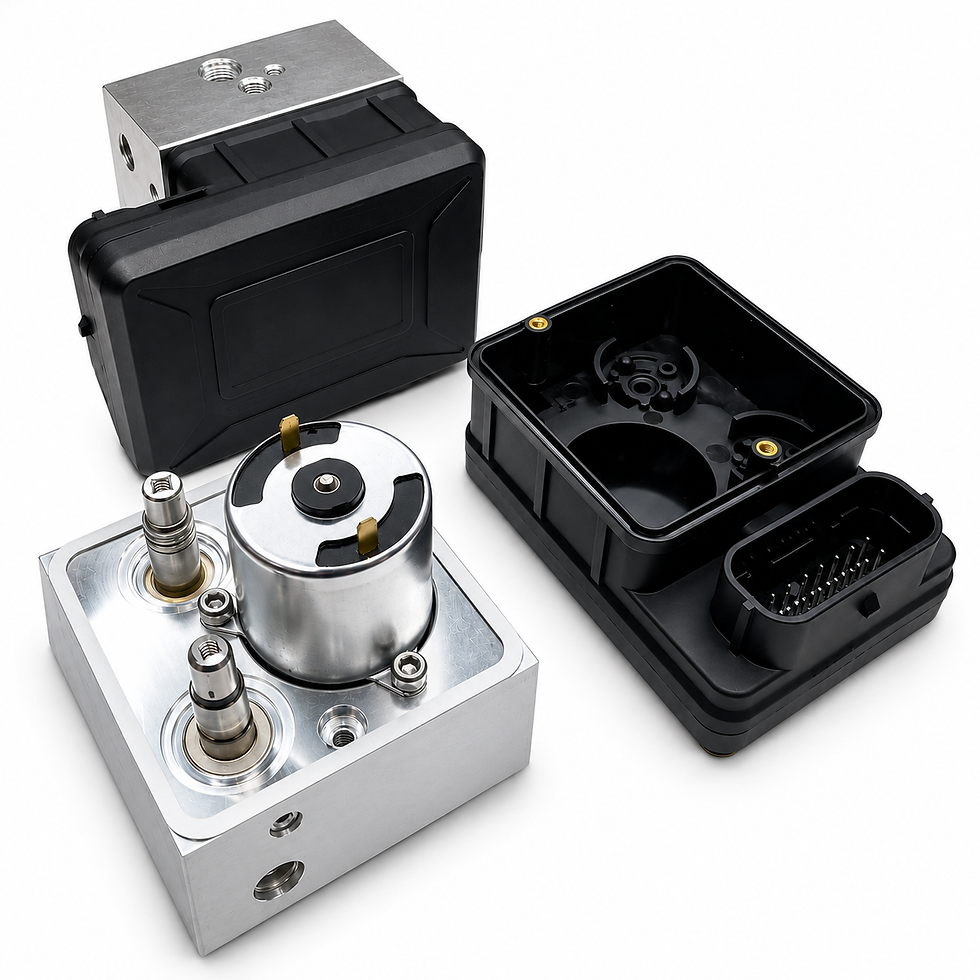
Ettiksoft Technologies develops indigenous ABS technology for two-wheeler applications, offering single-channel and dual-channel ABS solutions.
Its documented product portfolio includes Performance, Performance Plus and Premium variants. Depending on the selected configuration, capabilities include vehicle integration support, wheel-speed sensing, CAN communication, vehicle-specific calibration, diagnostics and features intended for electric two-wheeler applications.
Ettiksoft also supports engineering activities associated with mounting, hydraulic integration, software calibration and vehicle-level validation. The appropriate configuration and available features should be confirmed against the intended vehicle platform and technical requirements.
For OEMs evaluating a 2W ABS supplier in India, Ettiksoft offers a technology-partnership route to discuss braking architecture, integration requirements and development needs.
Explore the Ettiksoft Two-Wheeler ABS product page or contact the team through the Ettiksoft website.
Frequently Asked Questions
Who makes ABS for two-wheelers in India?
The market includes established automotive suppliers such as Bosch, Continental and Endurance Technologies, alongside other technology providers. Ettiksoft Technologies develops indigenous single-channel and dual-channel ABS solutions for two-wheeler applications.
Is ABS mandatory for all two-wheelers in India?
Requirements depend on the applicable CMVR provisions and vehicle classification. A 2025 MoRTH draft proposed ABS for all L2-category vehicles from 1 January 2026, but OEMs should verify the final applicable notification before making compliance decisions.
Is ABS available for electric scooters and motorcycles?
ABS can be integrated into electric two-wheelers. The system design should account for the vehicle's braking architecture, electrical interfaces and regenerative-braking strategy where applicable.
What is the difference between single-channel and dual-channel ABS?
Single-channel ABS controls one wheel, commonly the front wheel. Dual-channel ABS independently controls the front and rear brake circuits. The suitable configuration depends on the vehicle and its requirements.
How can an OEM evaluate Ettiksoft as an ABS supplier?
OEMs can contact Ettiksoft to discuss the required ABS configuration, vehicle architecture, integration needs, calibration and validation activities.
Conclusion
Choosing the right two-wheeler ABS involves evaluating safety requirements, system architecture, vehicle integration, validation and applicable regulations. As electric mobility and braking-system requirements evolve, OEMs benefit from engaging technology partners early in the vehicle development process.
Looking for a two-wheeler ABS supplier in India? Contact Ettiksoft Technologies to discuss single-channel or dual-channel ABS, EV integration and vehicle-specific engineering requirements.


Comments